

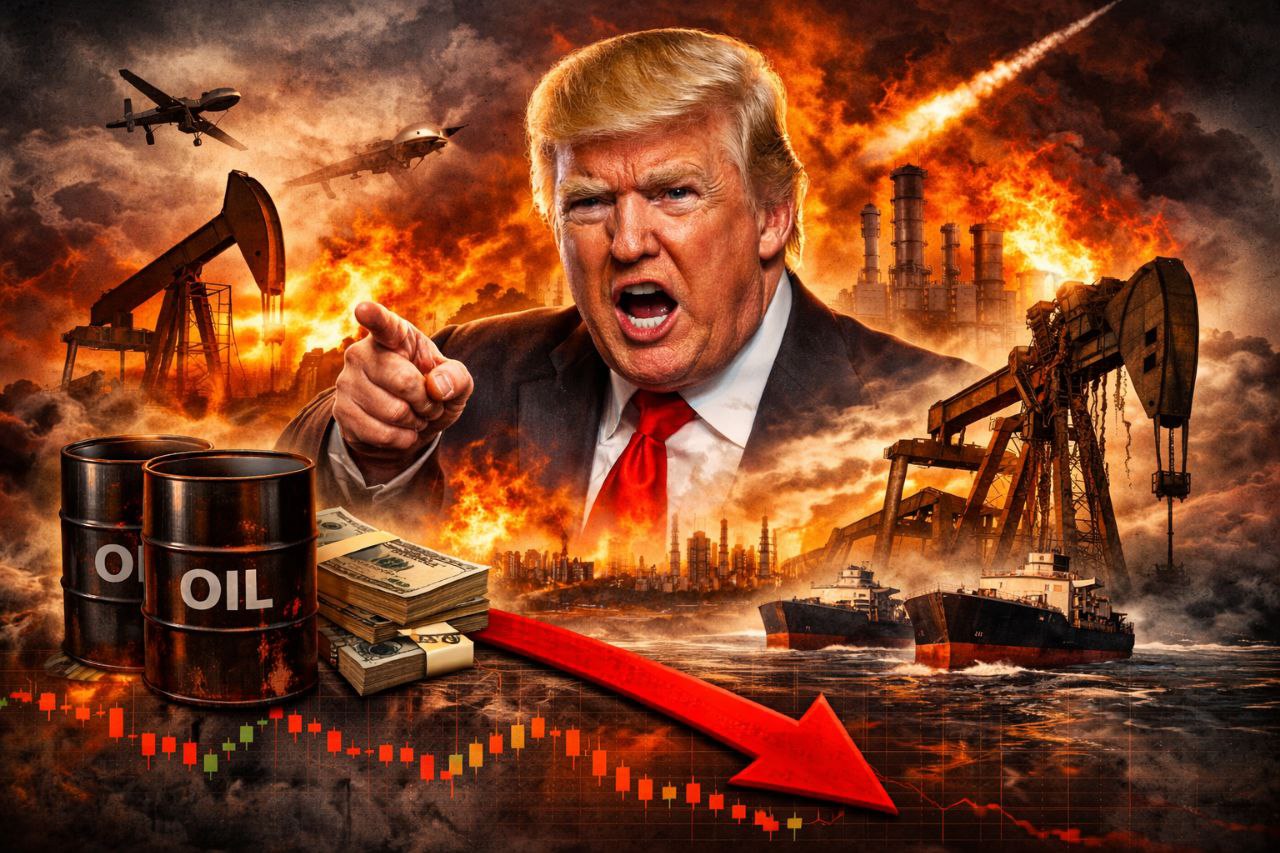
The escalation of the war involving Iran, the United States, and regional allies has rapidly transformed global energy markets. Within a single week, geopolitical tensions in the Middle East—home to roughly one-third of global oil production—triggered the largest surge in oil prices in years, while also reshaping expectations for inflation, energy security, and geopolitical risk.
This article examines the role of U.S. President Donald Trump in the conflict, the economic consequences observed during the past week, and the evolving situation in global oil and energy markets.
Trump’s Policy Response and Strategic Messaging
Over the past week, President Trump defended the military escalation involving Iran and publicly acknowledged the economic consequences of the conflict. In statements addressing rising fuel costs, Trump argued that higher energy prices represent a necessary trade-off for geopolitical security, describing elevated oil prices as a “very small price to pay” for global stability.
The administration simultaneously launched new initiatives aimed at safeguarding global energy flows, including a maritime security program designed to protect tanker routes through the Persian Gulf.
These measures are directly linked to concerns surrounding the Strait of Hormuz, one of the most strategically important shipping corridors in the world. Approximately 20% of global oil supply normally passes through this narrow waterway, making any disruption a major shock to global energy markets.
Following military strikes and retaliatory actions in the region, tanker traffic collapsed dramatically, with shipping activity falling by roughly 70% and in some cases nearly stopping altogether, prompting shipping firms to suspend operations.
Oil Markets: A Historic Weekly Surge
Energy markets reacted immediately to the conflict. In the days following the escalation, both benchmark crude contracts experienced historic volatility:
- Brent crude rose from roughly $92.69 per barrel early in the week to well above $110, at times touching $119.50 per barrel.
- West Texas Intermediate (WTI) followed a similar trajectory, jumping from around $90.90 per barrel to nearly $119 at its peak.
These increases represent the largest weekly rise in oil prices since the COVID-19 market shock of 2020, with Brent gaining about 27% in a single week and WTI rising more than 35%.
In broader market terms, oil prices have now surpassed the psychologically important $100 per barrel threshold for the first time since 2022, reflecting severe supply concerns across global energy markets.
Some analysts warn that if disruptions continue, prices could approach levels seen during earlier energy crises, potentially exceeding $120 per barrel or more.
Supply Disruptions Across the Middle East
Several structural disruptions have amplified the price shock:
- Production Cuts Across the Gulf
Oil output in Iraq, Kuwait, and the UAE has declined as security concerns intensify and tanker traffic drops sharply. - Infrastructure Attacks
Energy facilities across the region—including refineries and storage sites—have been targeted, creating additional uncertainty about supply stability. - Shipping Bottlenecks
With shipping routes in the Gulf increasingly risky, tankers are avoiding the region, causing delays and logistical disruptions that further tighten supply.
Combined, these disruptions have resulted in the most severe oil supply risk in more than two decades, according to market analysts.
Natural Gas and LNG Markets
While oil markets experienced the most dramatic spike, natural gas markets have also been affected.
European natural gas prices surged from roughly €30/MWh to above €60/MWh within days, before stabilizing near €48/MWh, reflecting concerns over supply disruptions in the Gulf region.
The situation worsened when Iranian drone strikes reportedly hit major gas infrastructure in Qatar, leading the state energy company to suspend production and declare force majeure on several LNG contracts.
Because Qatar is one of the world’s largest exporters of liquefied natural gas, any sustained disruption could significantly affect global energy balances.
Macroeconomic Consequences
The surge in energy prices has immediate implications for the global economy.
First, higher oil prices increase transportation and manufacturing costs, feeding directly into inflation. Analysts estimate that sustained prices above $100 per barrel could add up to 0.8 percentage points to global inflation.
Second, equity markets have already reacted negatively, with global stock indices declining as investors shift toward safer assets amid geopolitical uncertainty.
Finally, governments are considering emergency measures, including potential releases of strategic petroleum reserves and coordinated action by G7 energy ministers to stabilize markets.
Outlook for Energy Markets
The trajectory of global energy markets now depends heavily on the duration and geographic scope of the conflict.
If military operations remain limited and shipping routes reopen, oil prices could gradually retreat toward the $80–$90 range over the coming months. However, a prolonged conflict—or further disruptions to shipping through the Strait of Hormuz—could push prices well above $120 per barrel and trigger a broader global energy crisis.
For now, the Iran war has already demonstrated a central lesson of geopolitical economics: energy markets remain extraordinarily sensitive to political risk in the Middle East. Decisions taken in Washington, Tehran, and regional capitals over the coming weeks will therefore shape not only the outcome of the conflict but also the trajectory of the global economy in 2026.