


Proprietary trading (prop trading) plays a vital role in today’s financial markets. Unlike traditional brokerages that earn through commissions, prop trading firms use their own capital to make direct bets on price movements in various asset classes, including derivatives, stocks, and forex. The main goal is to generate profits from market inefficiencies and price action using a blend of technical analysis, quantitative models, and real-time decision-making.
Below are the most common strategies utilized by proprietary trading desks, highlighting how these approaches help generate consistent alpha in a competitive environment.
Scalping and high-frequency trading (HFT)
One of the most aggressive and time-sensitive strategies in prop trading is scalping. This approach involves executing hundreds or even thousands of trades per day to exploit small price fluctuations. Scalping typically occurs in highly liquid markets where price spreads are narrow. The profit per trade is small, but the high volume can result in significant daily returns.
To implement scalping effectively, many proprietary traders utilize high-frequency trading (HFT) systems. These rely on trading algorithms that can scan multiple markets, identify micro-opportunities, and execute trades within milliseconds. The speed and precision of these systems are critical, especially when dealing with order flow, latency arbitrage, and liquidity provision.
Statistical arbitrage and quantitative trading
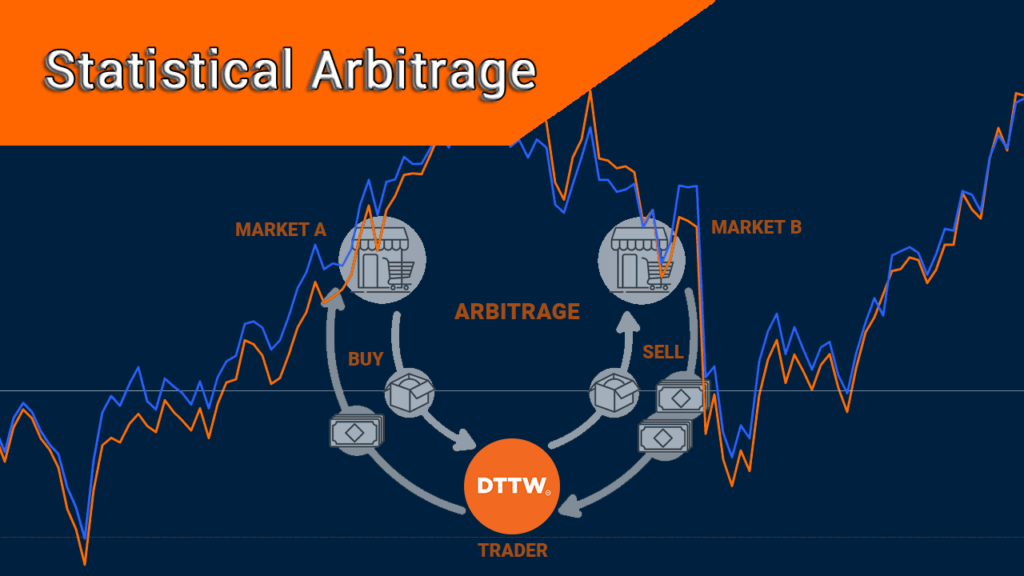
Statistical arbitrage is a favored strategy among quantitative prop trading desks. It involves building complex proprietary models to identify price discrepancies between two or more correlated instruments. These relationships are often based on historical data and mean-reversion principles. For example, a trader may take a spread trading position when two historically correlated stocks temporarily diverge in price.
This strategy heavily relies on backtesting, where models are tested using historical market data to ensure profitability and stability. Traders also incorporate machine learning and data science techniques to refine models and eliminate false signals. Because statistical arbitrage requires quick execution and vast data analysis, it is often supported by strong technological infrastructure and skilled quant teams.
Momentum and trend-following strategies

Momentum trading is another popular approach in the prop trading world, especially among day traders. This strategy is based on the belief that assets which have shown strong upward or downward price trends are likely to continue in that direction for a short period. Traders enter positions in the direction of the prevailing trend, using technical indicators such as moving averages, RSI, and MACD to confirm signals.
Momentum traders must be highly disciplined, as this strategy often involves tight stop losses and swift exits to avoid reversals. Some proprietary trading desks also combine momentum with liquidity analysis or volume-weighted average price (VWAP) targeting to enhance precision. In volatile markets, trend-following systems can be automated to react instantly to breakout signals across multiple assets.
Market making and arbitrage opportunities
Many proprietary trading firms engage in market making, a strategy where traders quote both bid and ask prices in a particular asset, aiming to profit from the bid-ask spread. Market makers play an essential role in improving liquidity and reducing slippage for all market participants. To manage risk, they use algorithms to maintain delta-neutral positions and rebalance portfolios in real time.
Another commonly used tactic is arbitrage trading, including cross-exchange, cross-asset, and geographic arbitrage. For example, a trader might simultaneously buy and sell the same asset on two different exchanges if a price discrepancy appears. These strategies often yield low-risk, high-frequency opportunities that require rapid execution, smart routing, and tight capital allocation.
Some prop firms also employ options arbitrage or volatility trading, focusing on implied vs. realized volatility spreads. These strategies often demand advanced knowledge of derivatives trading and a deep understanding of how pricing models behave under changing market conditions.
Conclusion: the dynamic nature of Prop Trading
What separates proprietary trading desks from retail traders or institutional investors is not only access to capital but also speed, scale, and strategy diversification. Successful prop traders often deploy multiple strategies simultaneously, switching between scalping, statistical arbitrage, or momentum-based trading depending on market volatility and available opportunities.
Furthermore, risk management is central to every strategy. Prop firms allocate capital dynamically, monitor drawdowns, and implement real-time risk controls. The use of automated trading systems, combined with rigorous backtesting and data-driven decision making, makes proprietary trading a highly competitive yet rewarding field.
As financial markets evolve and regulatory frameworks shift, so too will the tactics and tools used in proprietary environments. Nonetheless, the core of prop trading remains unchanged: using intelligence, speed, and strategy to gain a consistent trading edge.
Ready to put these strategies into action?
Explore our list of top proprietary trading brokers and find the platform that fits your style.
👉 Compare Prop Trading Brokers Now