

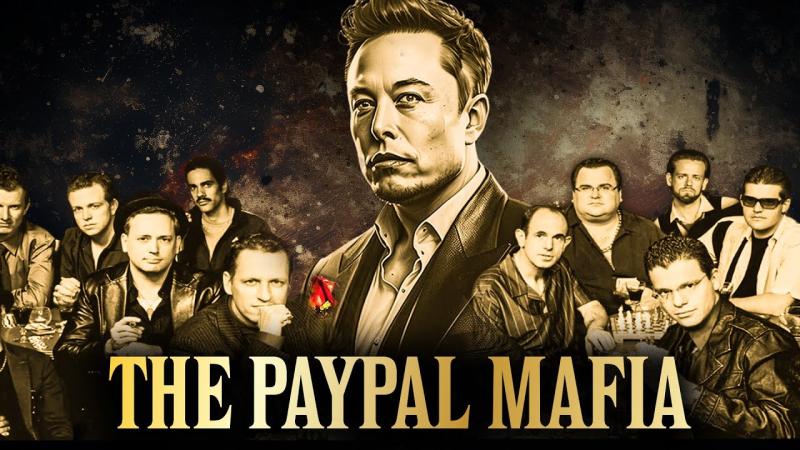
With Elon Musk taking the helm of the newly established advisory Department of Government Efficiency (DOGE) and David Sacks assuming the role of cryptocurrency and artificial intelligence (AI) czar in the incoming Trump administration, the influential “PayPal Mafia” from Silicon Valley has gained significant influence within the new government.
Originally coined by Fortune magazine in 2007, the term “PayPal Mafia” refers to former PayPal founders and executives who later launched or invested in numerous successful tech ventures. Over time, this informal network has transitioned from Silicon Valley power brokers to potential shapers of U.S. policy.
Key Takeaways
- Prominent members of the PayPal Mafia—a group of early PayPal founders and executives—are emerging as influential figures in Trump’s second administration.
- Notable figures include Peter Thiel, Elon Musk, and David Sacks.
- Their influence is expected to push U.S. policy toward reduced tech regulation, pro-cryptocurrency measures, a more lenient antitrust approach, and significant government spending cuts.
Who Are the PayPal Mafia?
PayPal Holdings Inc. (PYPL) was founded during the dot-com boom of the late 1990s, where it met the need for more efficient online payments. As a natural addition to online auctions, the company was bought by eBay Inc. (EBAY) in 2002 for $1.5 billion. This acquisition led to the dispersal of a group of entrepreneurs who would later play a role in reshaping the tech industry before entering politics.
Their experience in building PayPal exposed them to what they describe as excessive regulation and bureaucratic resistance, shaping the libertarian-leaning political ideology that they claim now influences their approach to governance—despite the numerous government contracts tied to the companies they have helped establish.
This network extends beyond the original PayPal founders and employees. Their wider sphere of influence includes figures such as Jim O’Neill, former CEO of Thiel’s foundation, chosen by Trump as deputy secretary of Health and Human Services; Trae Stephens, a Founders Fund partner under consideration for deputy secretary of defense; and Michael Kratsios, Thiel’s former chief of staff, who is overseeing tech policy during the transition.
Even Vice President-elect JD Vance, who was employed at Thiel’s Mithril Capital and whose political career has been actively supported and promoted by Thiel, serves as a continuation of this network’s expanding political influence.
Peter Thiel

Founders Fund and founded Palantir Technologies Inc. (PLTR), while gradually becoming one of the most influential figures in conservative politics. As an early supporter and adviser to Trump, the libertarian-leaning Thiel has positioned himself as a link between Silicon Valley and conservative politics.
As an investor in various tech companies and bitcoin, Thiel would gain from looser regulations in the tech industry and policies favoring cryptocurrency. He also advocates for free trade, stricter immigration controls, and a more aggressive approach toward China.
Elon Musk

Elon Musk’s interactions with political figures have evolved to he point where he has become a political figure himself—he spent hundreds of millions funding Donald Trump’s 2024 campaign, delivered speeches in his support, and is now pressuring Republicans who oppose certain policies, with his active campaigning for Trump highlighting his political involvement.
As the CEO of Tesla (TSLA), X (formerly Twitter), and SpaceX, Musk already holds considerable sway over social media, electric vehicles, space exploration, and artificial intelligence. Moreover, his companies have secured billions of dollars in U.S. government contracts in recent years, giving him a direct interest in influencing policy.
Musk’s public push for reducing government expenditures and enhancing transparency has aligned with his political efforts, leading Trump to appoint him as co-leader of DOGE alongside Vivek Ramaswamy. (Musk, notably, is also a vocal supporter of Dogecoin, which coincidentally shares the same acronym.) Musk has vowed to cut $2 trillion from the federal budget.
However, DOGE is not an official government department, Congress retains exclusive authority over federal budgets, and most analysts regard such drastic cuts as unrealistic.
David Sacks

Sacks, the former chief operating officer (COO) of PayPal and an experienced venture capitalist, has become a leading figure in shaping technology policy. His background in technology and finance gives him significant influence in debates over cryptocurrency regulation and the governance of the tech industry, especially concerning AI. Trump has appointed him as his new “AI and crypto czar.”
Sacks, who is also an investor in Palantir and SpaceX, has advocated for reducing regulations on tech companies and has criticized traditional financial institutions, indicating that he is likely to support policies that benefit cryptocurrency firms.
What Is the Role of the PayPal Mafia?
The phrase “PayPal Mafia” refers to former PayPal founders and executives who later founded or invested in many successful tech companies. They are increasingly entering political spheres and are expected to leverage their influence to shape policies to their advantage.
Which Universities Did the PayPal Mafia Attend?
The majority of these entrepreneurs attended either Stanford University or the University of Illinois Urbana-Champaign.
Is Elon Musk one of PayPal’s Founders?
Elon Musk is often credited as a co-founder of PayPal, but in reality, he founded X.com, which later merged with PayPal, ultimately making him a co-founder.
The Key Takeaway
The growing presence of Silicon Valley figures in top political positions signals a new era in American governance. These seasoned tech leaders appear set to influence national policy under Trump’s second administration. Their impact—whether successful or not—will likely shape the future of the tech industry, government operations, and everyday life in the U.S. Additionally, as investors in major tech firms and cryptocurrencies, they stand to gain substantial financial benefits if their policy proposals come to fruition.