

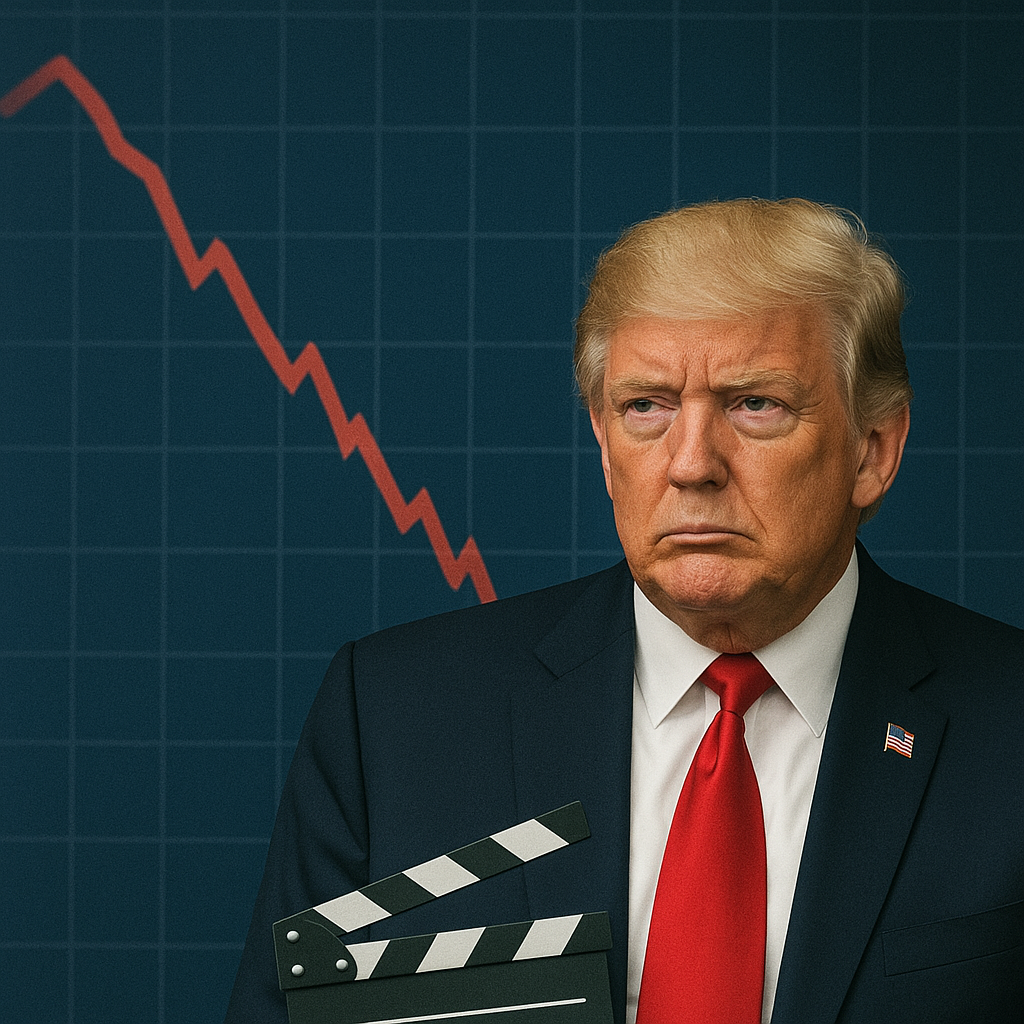
(Reuters) – Shares of American media companies dropped sharply on Monday following President Donald Trump’s announcement of a 100% tariff on all films made outside the United States — a policy shift that could significantly increase expenses for Hollywood studios and disrupt the international film industry.
The statement provided few specifics. It remains unclear whether the new tariffs will apply to movies released on streaming platforms, in cinemas, or both. There was also no clarification on whether the tariff will be based on a film’s production budget or its box office performance.
Industry experts pointed out that Netflix (NFLX), known for its extensive international production footprint, could be especially vulnerable. The company depends heavily on global studios to create content for audiences around the world. As a result, Netflix shares dropped 4.9% in premarket trading, spearheading the broader downturn in media stock prices.
Although Los Angeles has traditionally been seen as the heart of the film industry, in recent years many studios have relocated production overseas — particularly to countries like the United Kingdom — drawn by generous tax incentives and more affordable operating costs. In fact, none of this year’s ten Oscar nominees for Best Picture were filmed in the Californian city.
Requiring studios to bring production back to the U.S. could significantly raise costs across the board. Today’s film industry is heavily dependent on a globally distributed production model — with filming often done in Europe, post-production taking place in Canadian facilities, and visual effects handled by teams throughout Southeast Asia.
Following the news, shares of major industry players such as Walt Disney Co, Warner Bros Discovery, and Comcast (which owns Universal) declined between 0.8% and 2.7%.
“The issue is that nearly all studios are shifting substantial portions of their production abroad to cut expenses and benefit from foreign tax incentives,” said Barton Crockett, an analyst at Rosenblatt Securities.
He warned that increasing production costs through tariffs could push studios to scale back their output. “There’s also the possibility that other countries could retaliate by imposing tariffs on U.S. entertainment exports,” Crockett added.
In 2023, American films brought in $22.6 billion in international revenue and contributed to a trade surplus of $15.3 billion, according to data from the American Motion Picture and Television Industry.
A recent survey by ProdPro, which polled studio executives about their preferred production sites for 2025 and 2026, revealed that all of their top five locations were situated outside of the United States.